Explainers
Visual explainers on AI, cloud, and genomics: interactive charts to explore, short videos to watch, and card decks built for LinkedIn to flip through.
Shorts 1
Interactive figures 1
Model cheat sheets 9
 Reference card
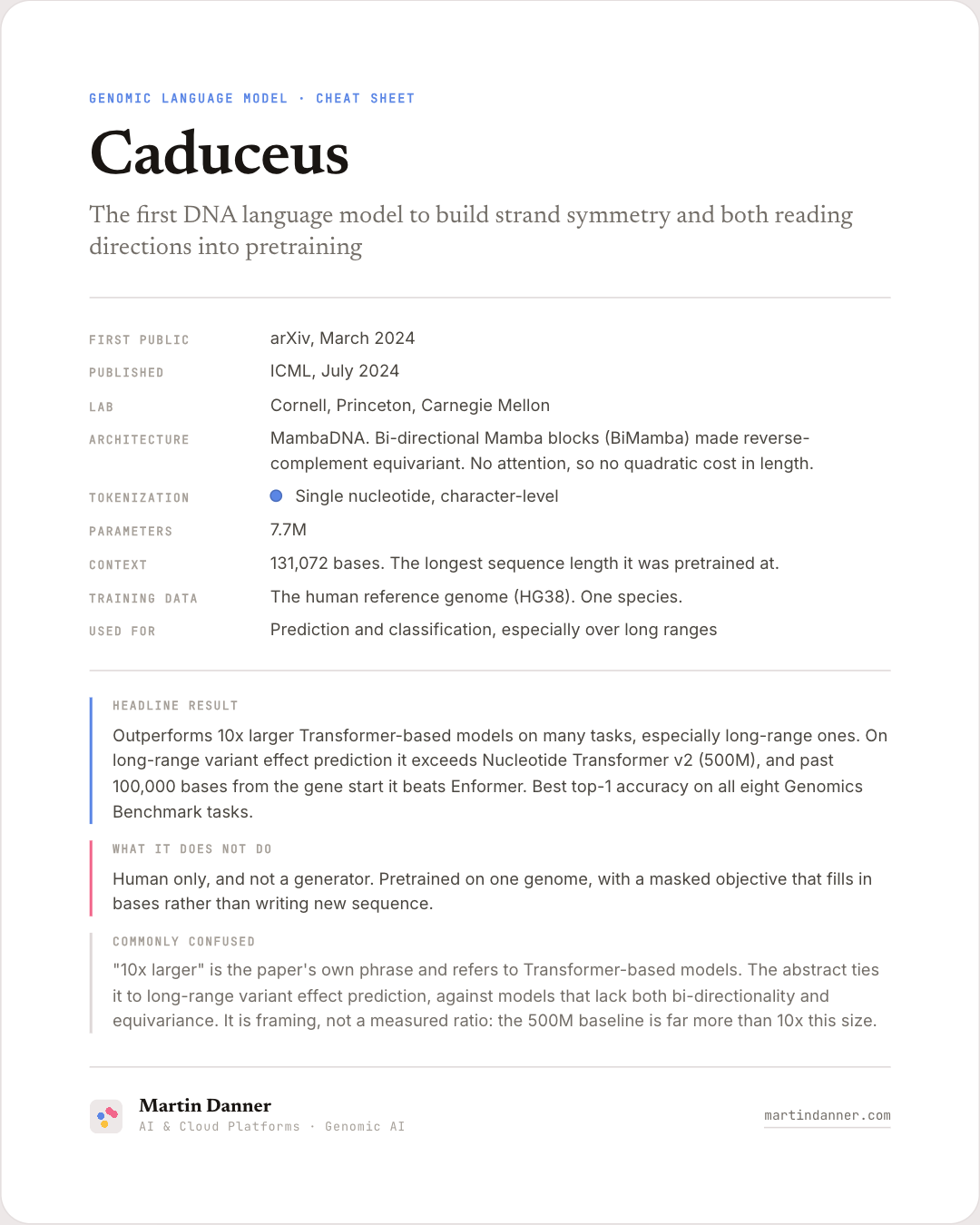
 gLM cheat sheet: Caduceus
One reference card for Caduceus: architecture, tokenization, size, context, training data, what it was shown to do and what it does not do. One card in a set that covers one genomic language model at a time.
Open the card → Reference card
 gLM cheat sheet: DNABERT
One reference card for DNABERT: architecture, tokenization, size, context, training data, what it was shown to do and what it does not do. One card in a set that covers one genomic language model at a time.
Open the card → Reference card
 gLM cheat sheet: DNABERT-2
One reference card for DNABERT-2: architecture, tokenization, size, context, training data, what it was shown to do and what it does not do. One card in a set that covers one genomic language model at a time.
Open the card → Reference card
 gLM cheat sheet: Evo 2
One reference card for Evo 2: architecture, tokenization, size, context, training data, what it was shown to do and what it does not do. One card in a set that covers one genomic language model at a time.
Open the card → Reference card
 gLM cheat sheet: GROVER
One reference card for GROVER: architecture, tokenization, size, context, training data, what it was shown to do and what it does not do. One card in a set that covers one genomic language model at a time.
Open the card → Reference card
 gLM cheat sheet: HyenaDNA
One reference card for HyenaDNA: architecture, tokenization, size, context, training data, what it was shown to do and what it does not do. One card in a set that covers one genomic language model at a time.
Open the card → Reference card
 gLM cheat sheet: Nucleotide Transformer v3
One reference card for Nucleotide Transformer v3: architecture, tokenization, size, context, training data, what it was shown to do and what it does not do. One card in a set that covers one genomic language model at a time.
Open the card →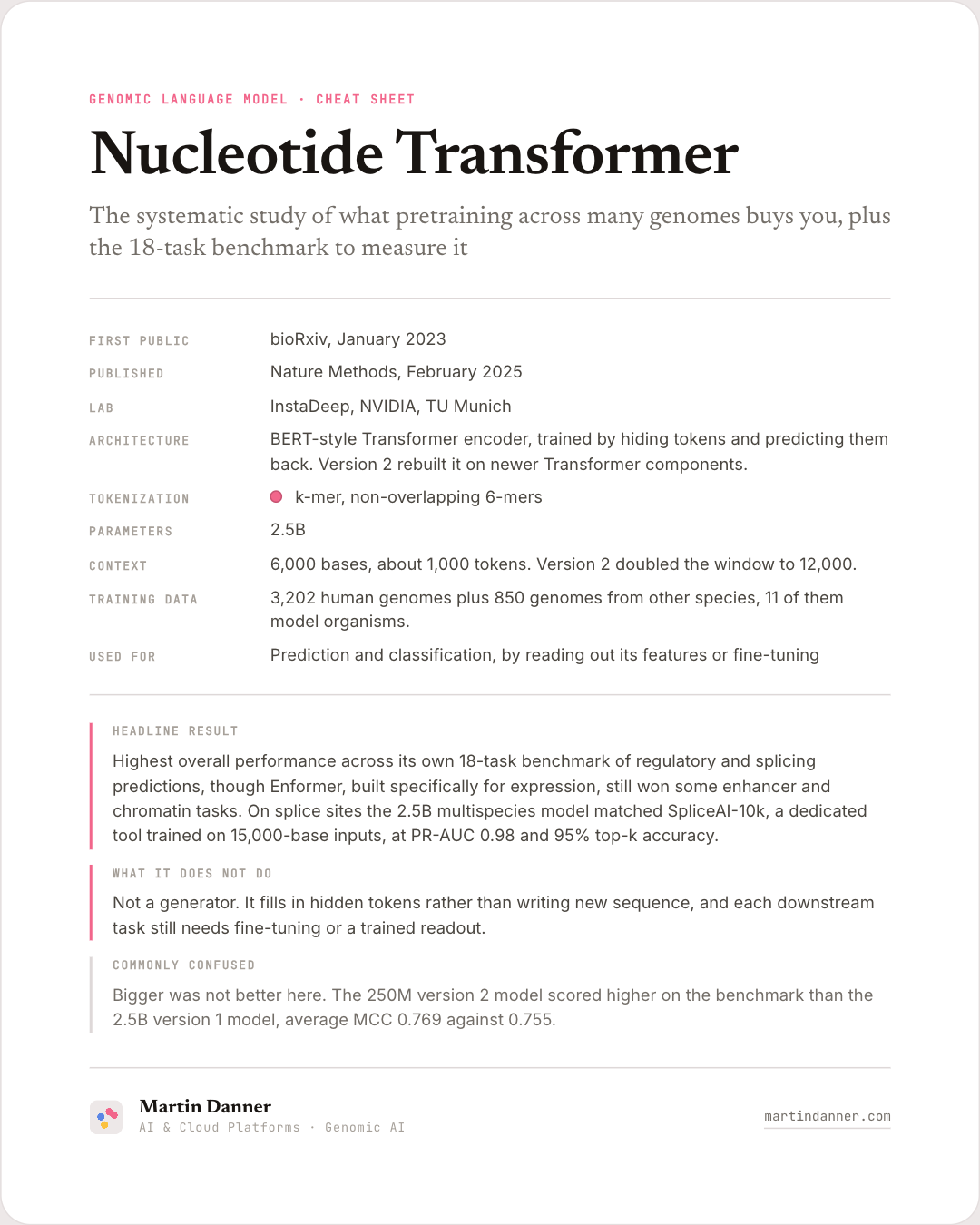 Reference card
 gLM cheat sheet: Nucleotide Transformer
One reference card for Nucleotide Transformer: architecture, tokenization, size, context, training data, what it was shown to do and what it does not do. One card in a set that covers one genomic language model at a time.
Open the card →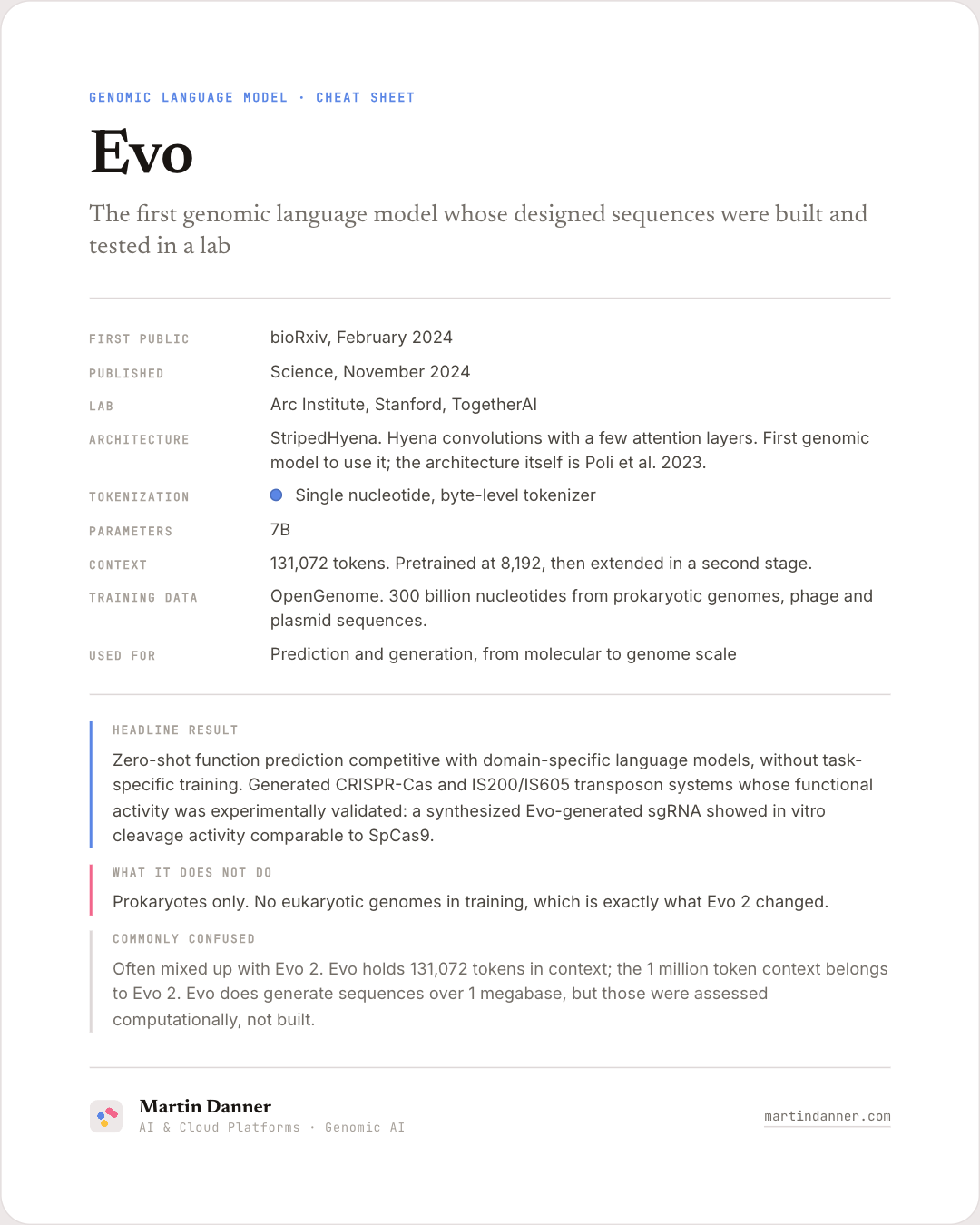 Reference card
 gLM cheat sheet: Evo
One reference card for Evo: architecture, tokenization, size, context, training data, what it was shown to do and what it does not do. One card in a set that covers one genomic language model at a time.
Open the card →Card decks 13
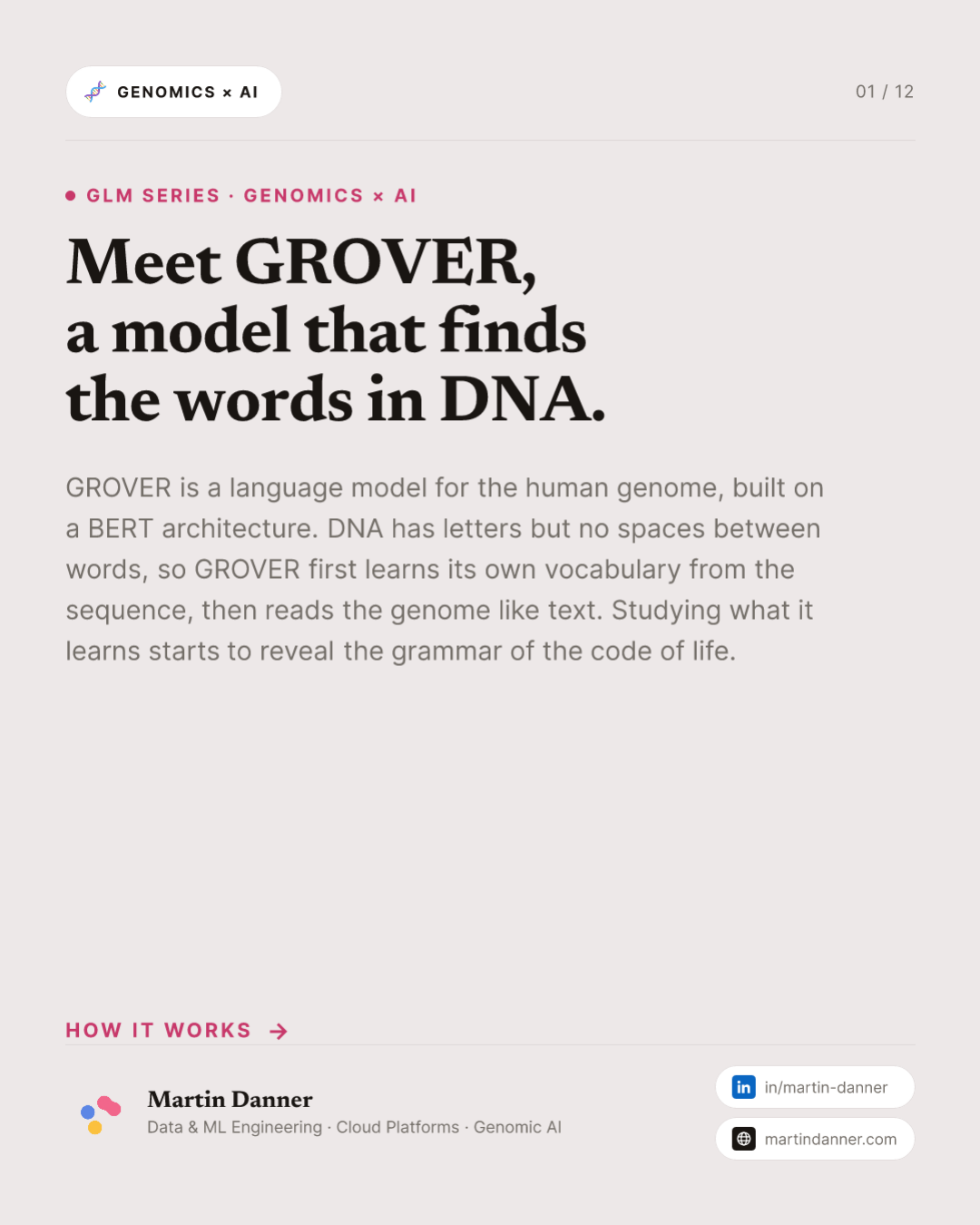 12 cards
 GROVER: a model that finds the words in DNA
GROVER is a language model for the human genome, built on a BERT architecture. DNA has letters but no spaces between words, so GROVER learns its own frequency-balanced vocabulary from the sequence, then reads the genome like text. Studying what it learns starts to reveal the grammar of the code of life.
View →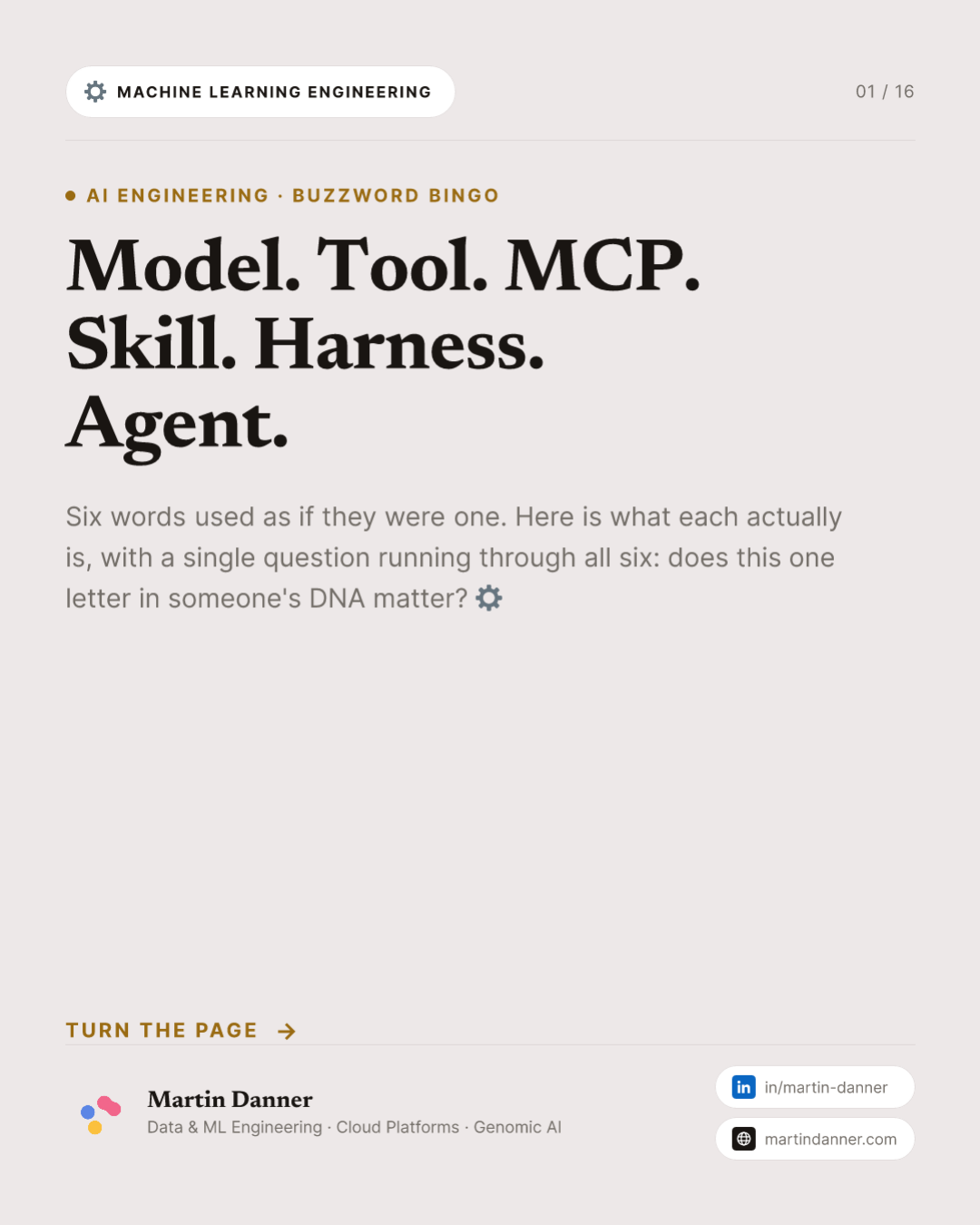 16 cards
 LLM Buzzword Bingo: Model, Tool, MCP, Skill, Harness, Agent
Six words that get used as if they were one. One line each, then a worked example that runs all six through the same case: a single letter in someone's DNA, and whether it matters.
View →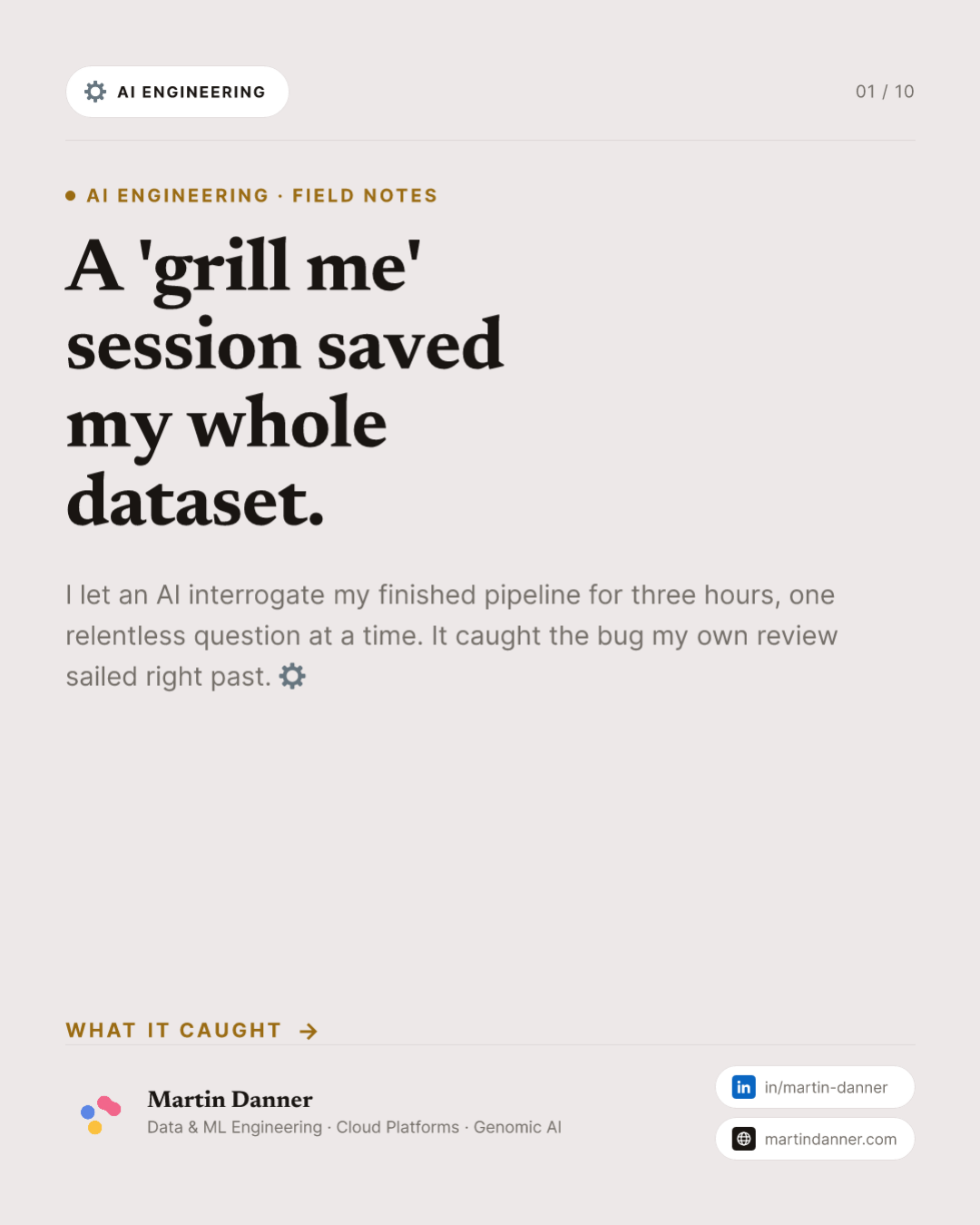 10 cards
 The 'Grill Me' Skill
The viral 'grill me' skill (181k GitHub stars) is one page of markdown that interrogates you about your own work, one relentless question at a time. Three hours of it caught a best-practice bug that would have quietly destroyed my methylation dataset.
View →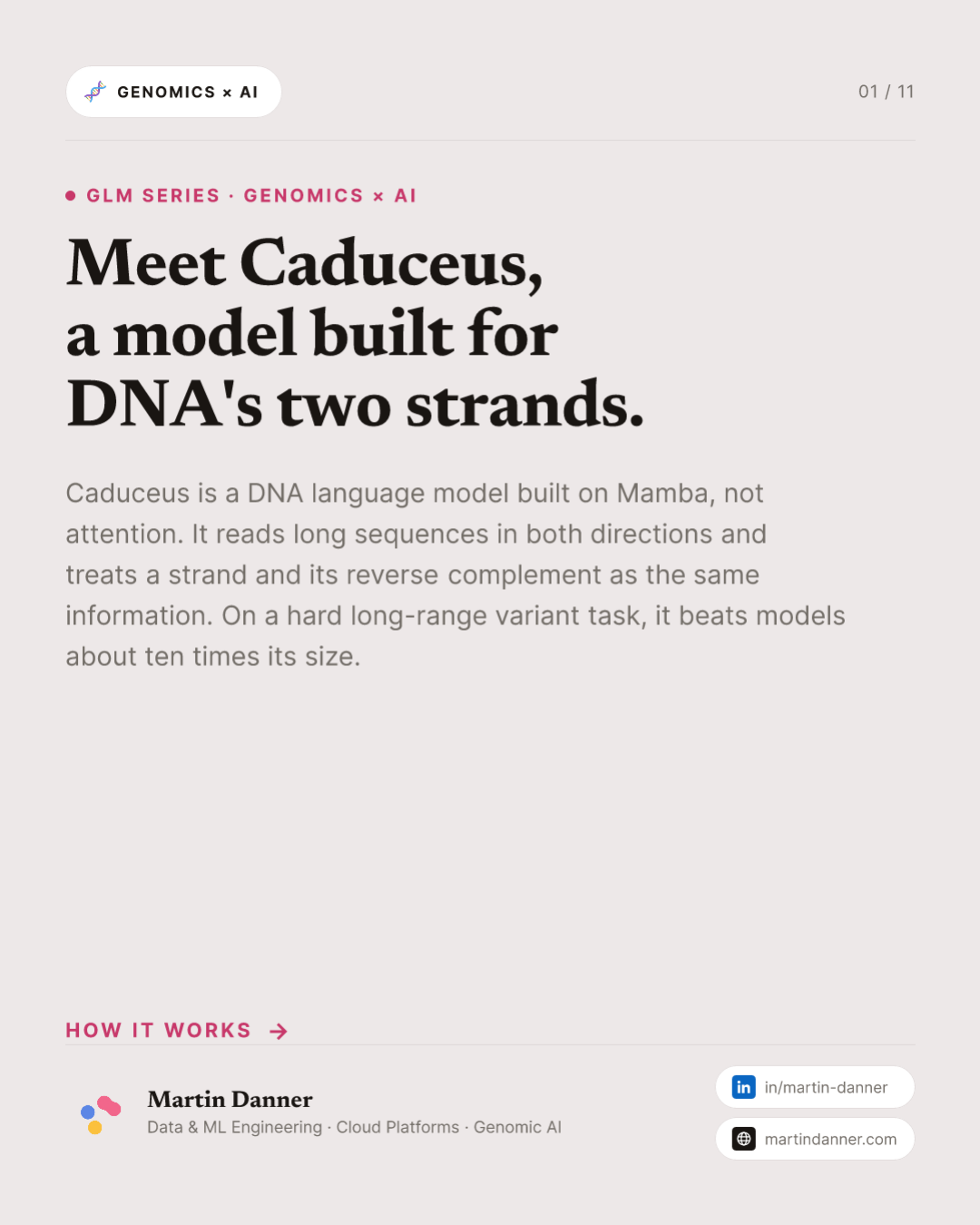 11 cards
 Caduceus: a DNA model built for both strands
Caduceus is a DNA language model built on Mamba, not attention. It reads long sequences in both directions and treats a strand and its reverse complement as the same information. On a hard long-range variant-effect task it beats models about ten times its size that lack both properties.
View →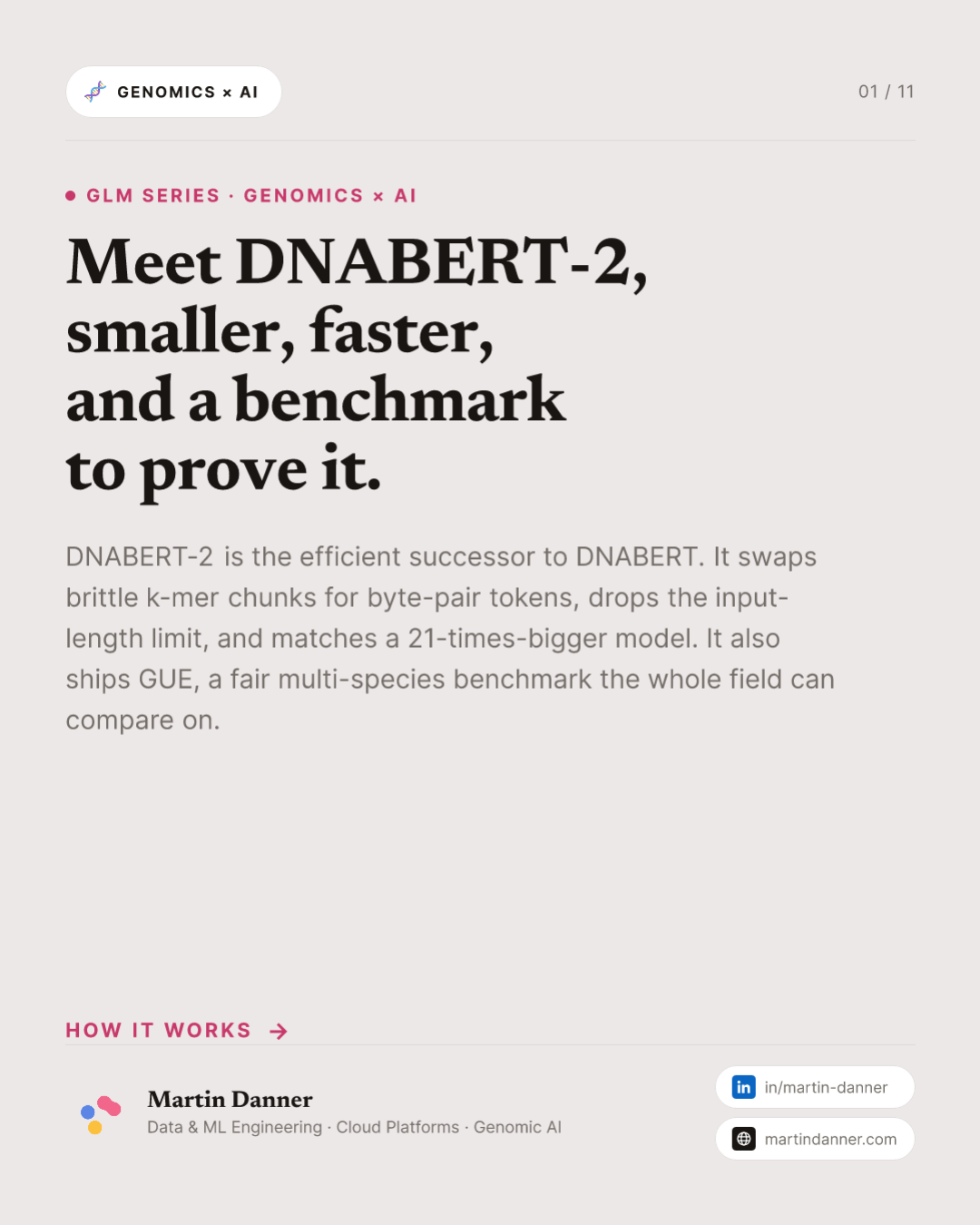 11 cards
 DNABERT-2: smaller, faster, and a benchmark to prove it
DNABERT-2 is the efficient successor to DNABERT. It swaps brittle k-mer chunks for byte-pair tokens, drops the input-length limit, and matches a 21-times-bigger model on the GUE benchmark it also introduced, a fair multi-species test the whole field can compare on.
View →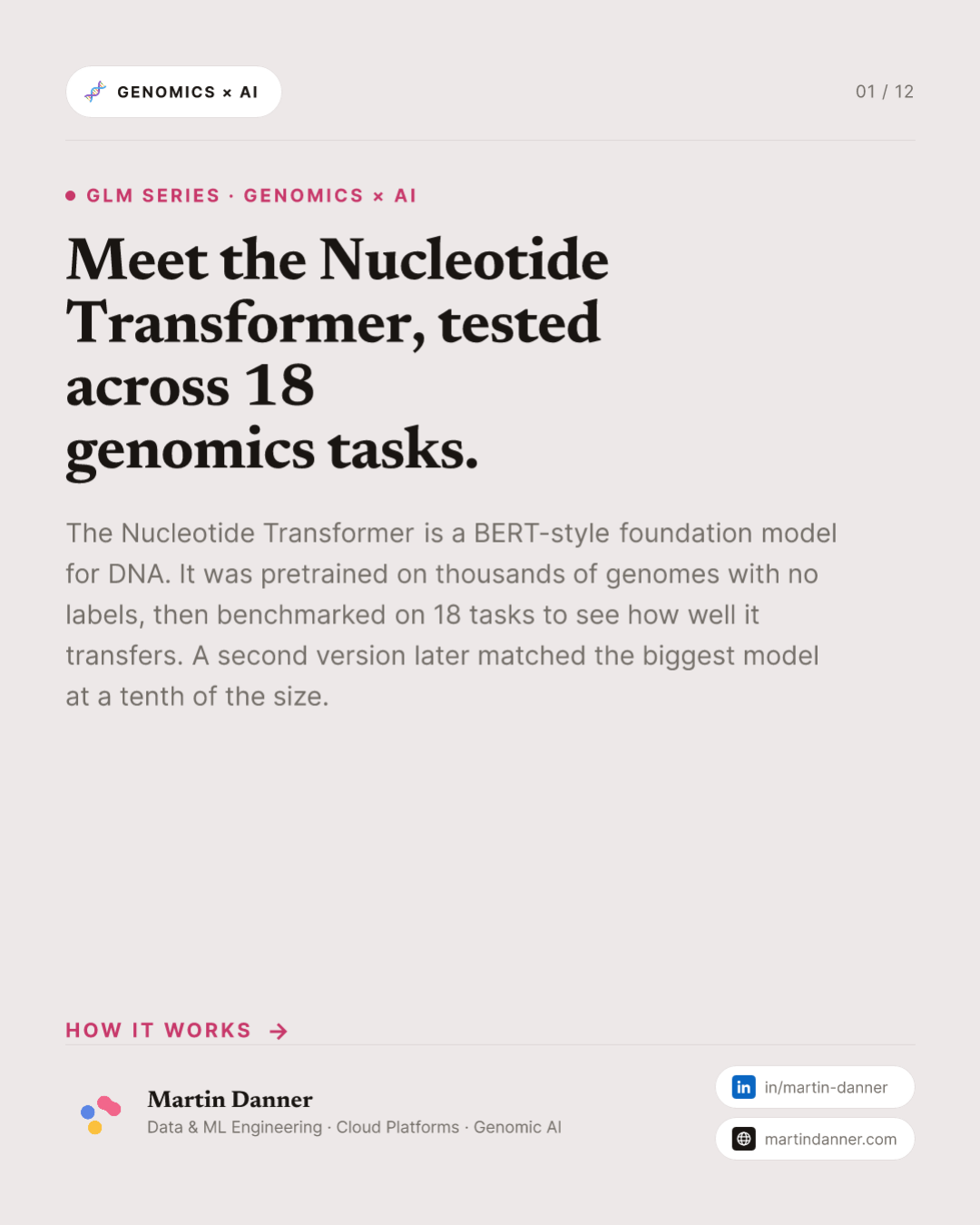 12 cards
 Nucleotide Transformer: one DNA model, 18 genomics tasks
The Nucleotide Transformer is a BERT-style foundation model for DNA, pretrained on thousands of genomes with no labels, then benchmarked on 18 tasks. It matches specialist tools, learns genomic elements on its own, and in version 2 a 250-million-parameter model beat the 2.5-billion one at a tenth of the size.
View →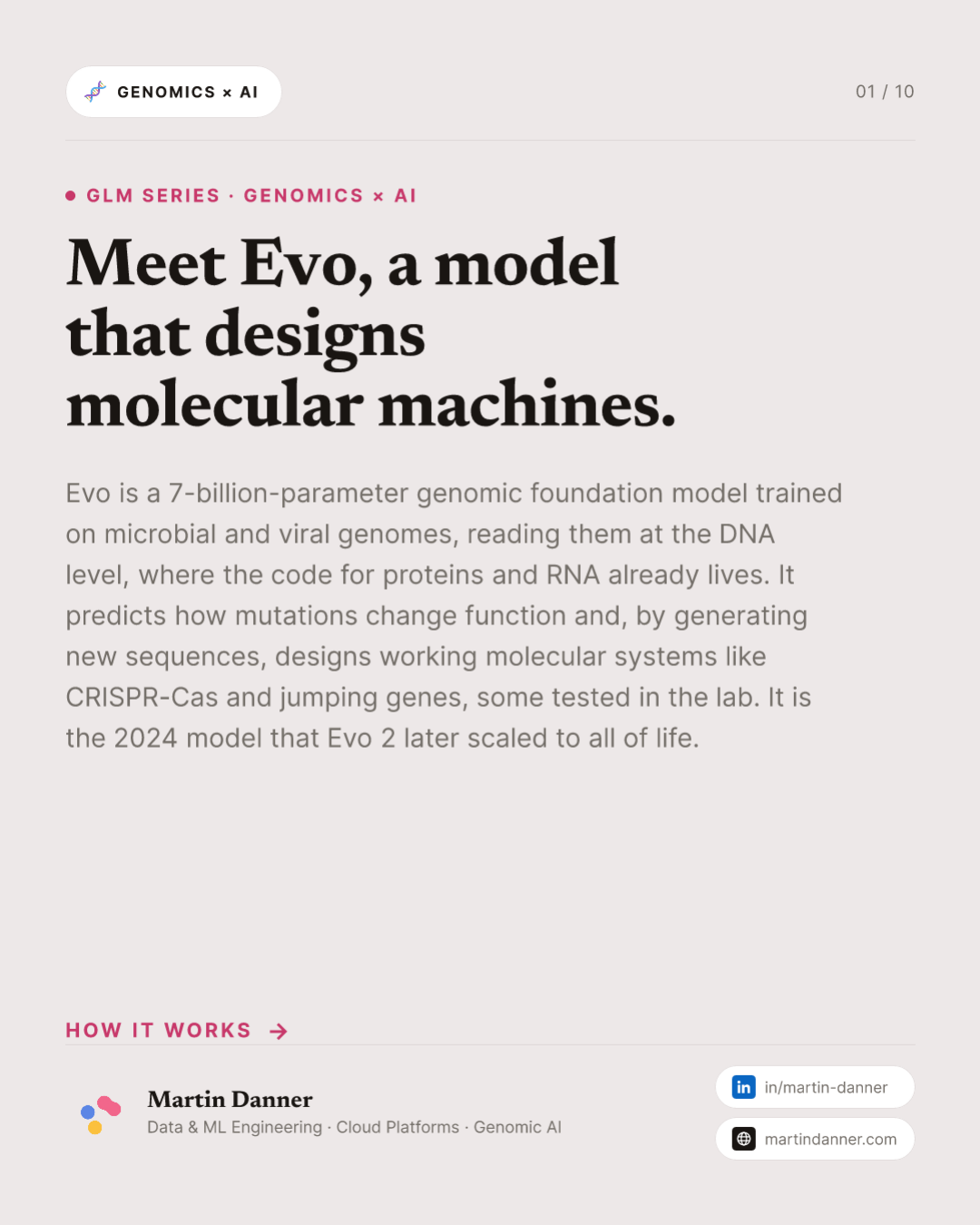 10 cards
 Evo: a model that designs molecular machines
Evo is a 7-billion-parameter genomic foundation model trained on microbial and viral genomes, reading DNA, RNA and protein together. It predicts how mutations change function and, by generating new sequences, designs working molecular systems like CRISPR-Cas and jumping genes, some tested in the lab. The 2024 model that Evo 2 later scaled to all of life.
View →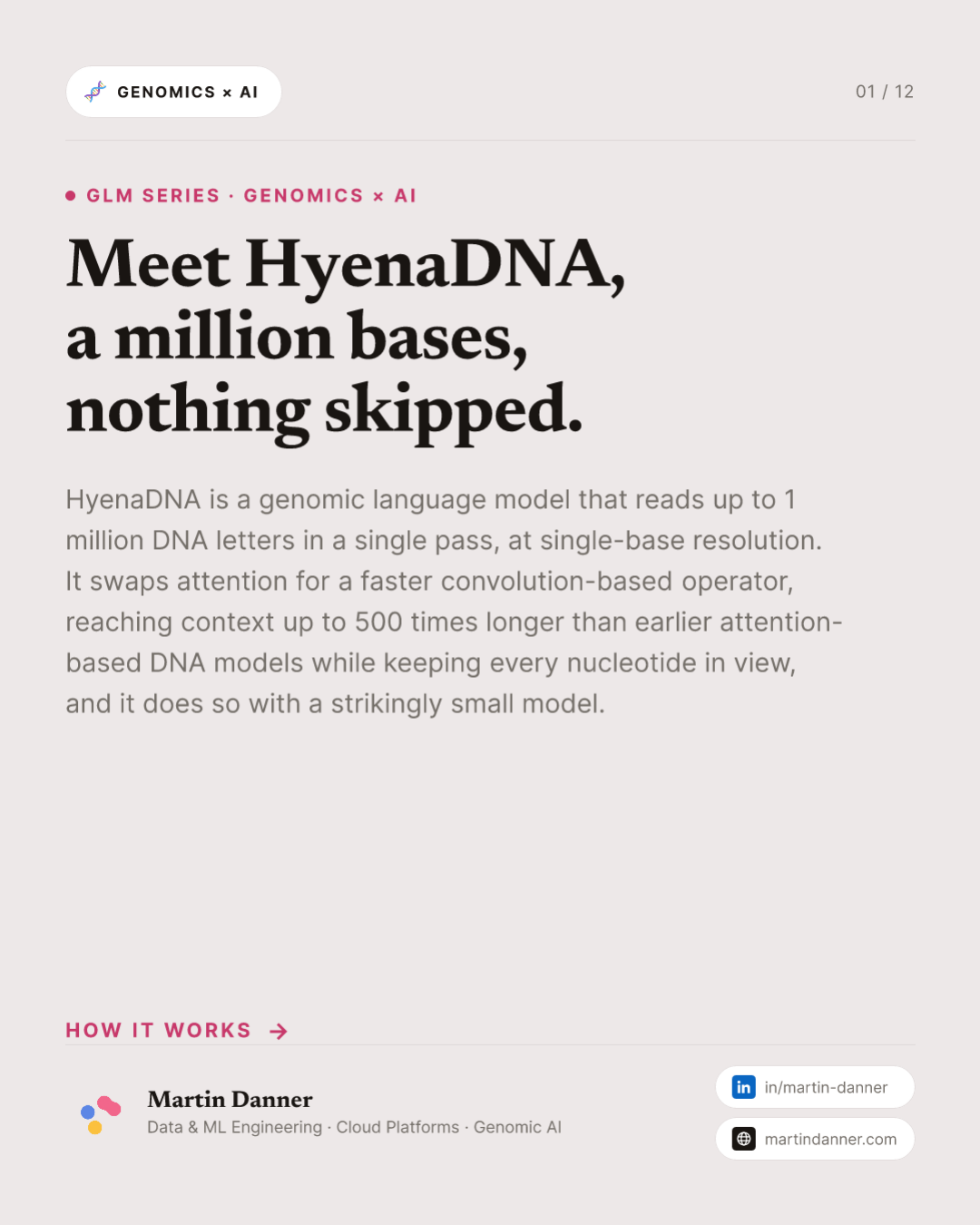 12 cards
 HyenaDNA: a million bases, nothing skipped
HyenaDNA is a genomic language model that reads up to 1 million DNA letters in a single pass, at single-base resolution. By swapping attention for the faster Hyena operator, it reaches context up to 500 times longer than earlier DNA models while keeping every nucleotide in view, in a strikingly small model.
View →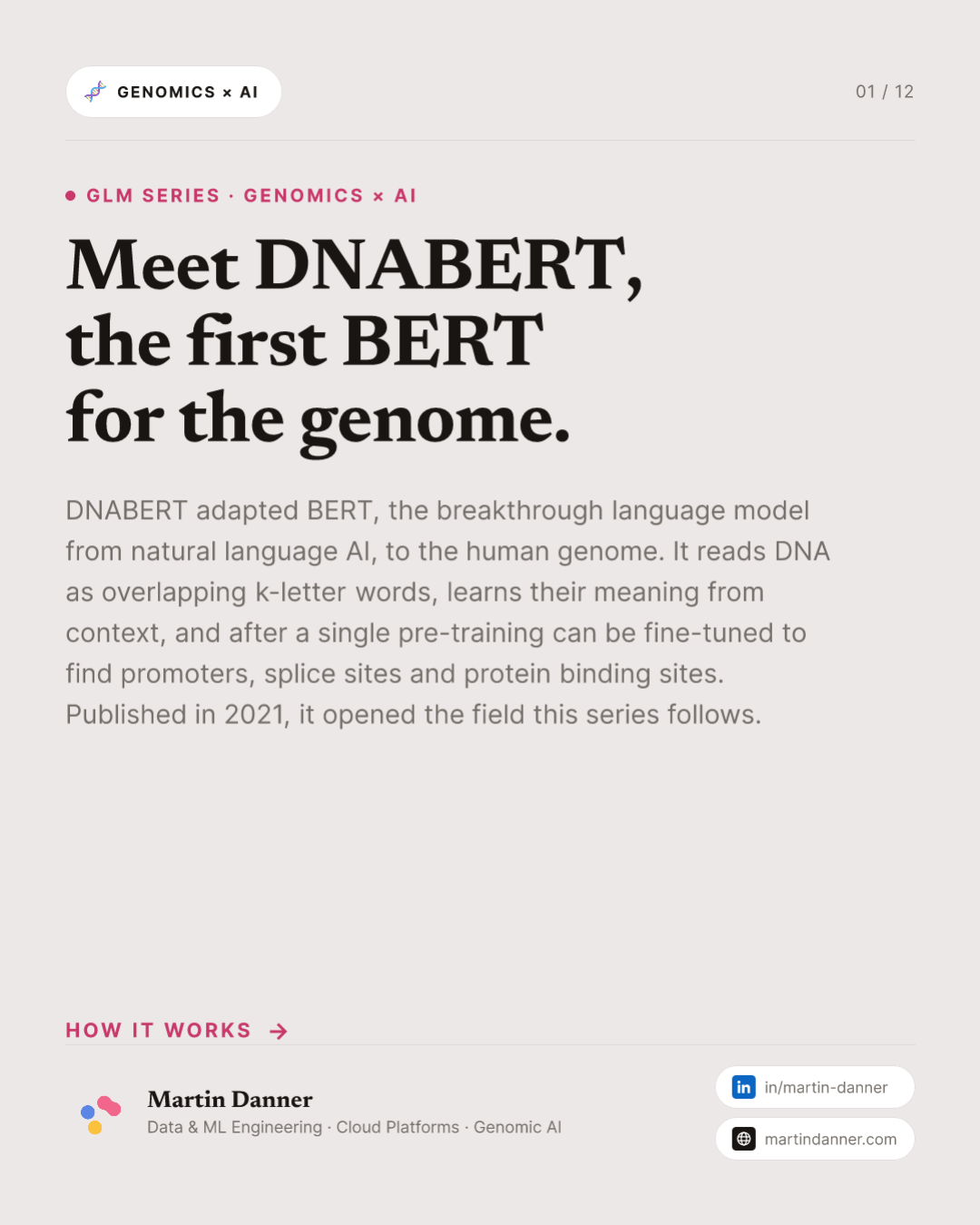 12 cards
 DNABERT: the first BERT for the genome
DNABERT adapted BERT, the breakthrough language model from natural language AI, to the human genome. It reads DNA as overlapping k-letter words, pre-trains once on the raw genome, and is then fine-tuned to find promoters, splice sites and protein binding sites. Published in 2021, it opened the field of DNA language models.
View →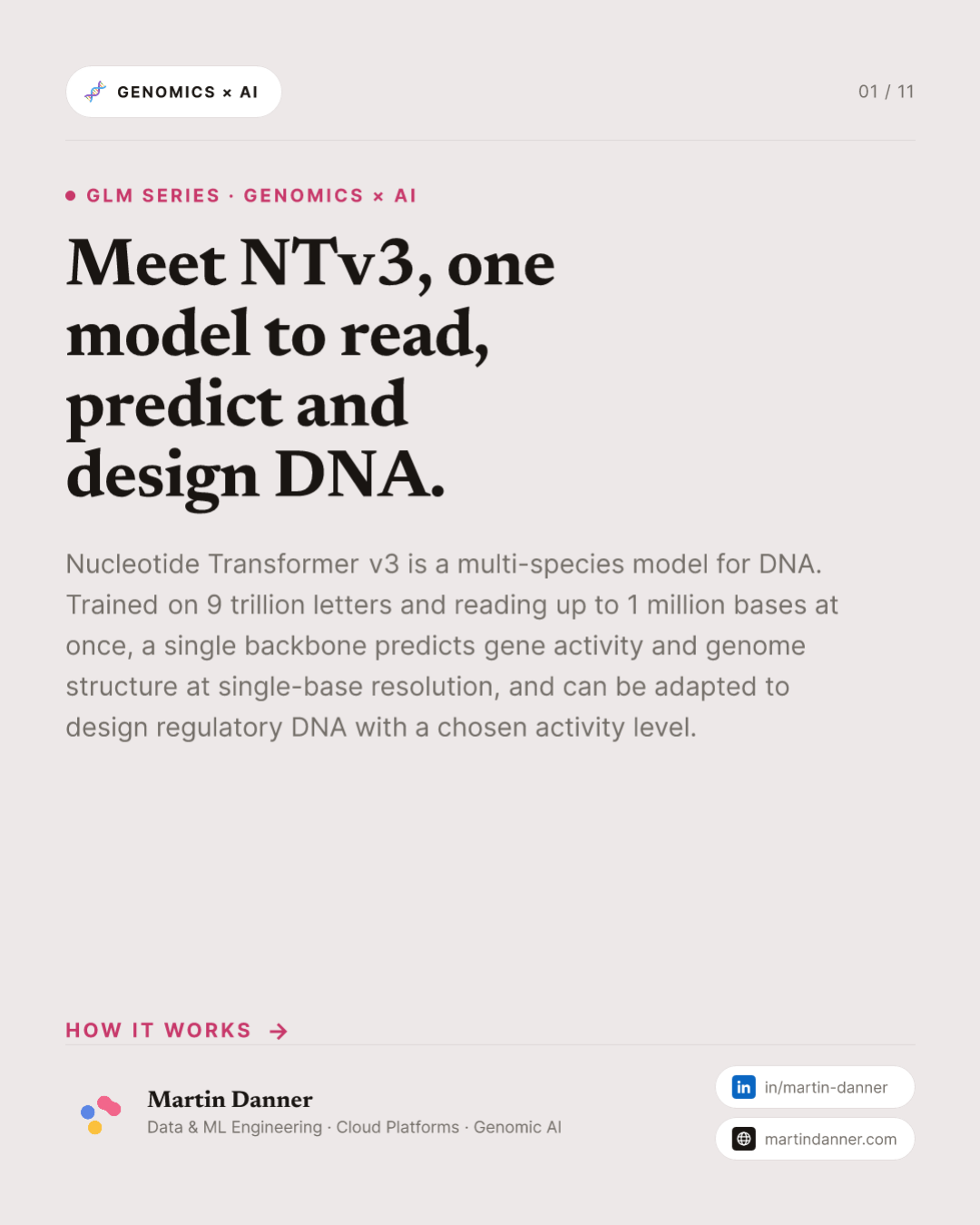 11 cards
 NTv3: one model to read, predict and design DNA
Nucleotide Transformer v3 is a multi-species model for DNA, trained on 9 trillion letters and reading up to 1 million bases at once. One backbone predicts gene activity and genome structure at single-base resolution, and can be adapted to design regulatory DNA with a chosen activity level.
View →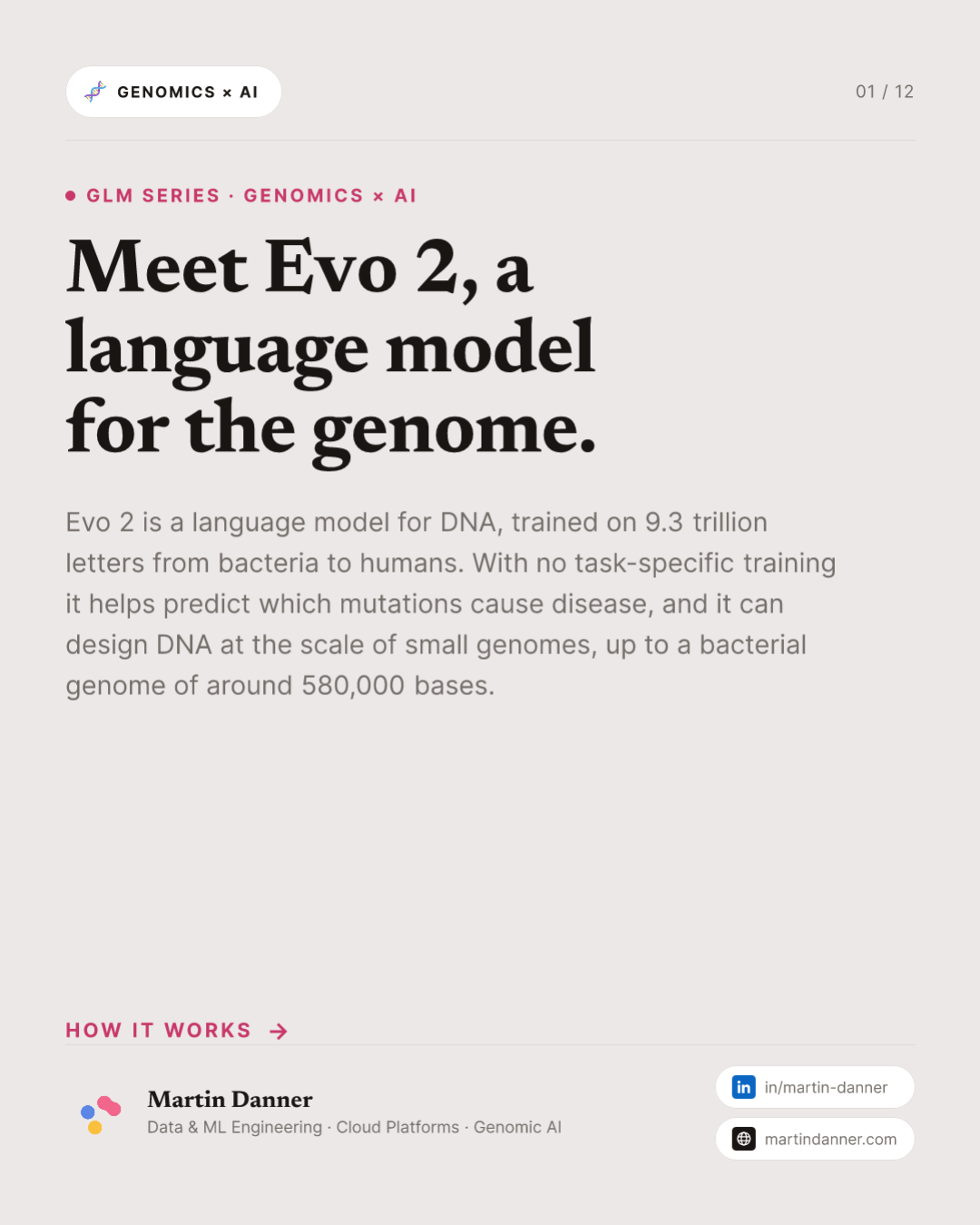 12 cards
 Evo 2: a language model for the genome
Evo 2 is a language model for DNA, trained on 9.3 trillion letters from bacteria to humans. With no task-specific training it predicts which mutations cause disease, and it can design whole genomes from scratch.
View → 14 cards
 Genomic Data Formats
Genomics is a data discipline, and it shows in the files. A plain tour of the specialized, often startlingly efficient formats a genomic pipeline touches, from FASTQ and FASTA to VCF, BED, and GFF3, each with a tiny example so it makes sense even if you have never opened one.
View → 10 cards
 DeepMind's Science Skills
Google DeepMind released Science Skills, tested tools your AI agent can use during genomic research. Ask in plain language and it runs the real ones, like ClinVar and AlphaGenome, instead of juggling tabs and throwaway scripts.
View →